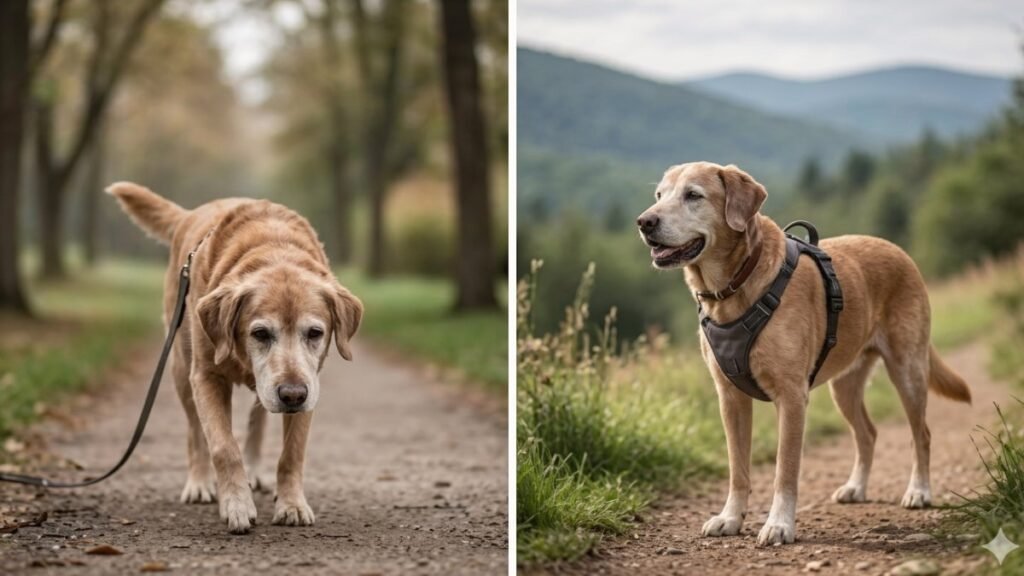
If it feels like your older dog sleeps most of the day, you are not imagining it. Senior dogs commonly rest 16 to 18 hours out of every 24. The question worth asking is not whether they sleep a lot — it is whether they are sleeping well.
How much is normal, by life stage
Sleep needs rise at both ends of a dog’s life:
- Puppies: 18–20 hours — growth is exhausting work
- Adults: 12–14 hours, including overnight
- Seniors (roughly 7+): 16–18 hours, with more daytime naps
So a grey-muzzled dog dozing through the afternoon is doing exactly what their body needs.
Why senior dogs sleep more
Older bodies recover more slowly, so they bank more rest. Sleep is also when tissues repair, including the joints and muscles that work harder with age. And gentle cognitive ageing means dogs simply have less drive to stay alert through a quiet day.
More sleep is normal. Restless, broken sleep — or sleeping so deeply they miss meals — is the part worth watching.
Healthy rest vs. worrying lethargy
The difference is in the texture of the sleep and what surrounds it. Reach out to your vet if you notice:
- Sudden, marked increase in sleep over days rather than months
- Difficulty settling, frequent repositioning, or pacing at night
- Sleeping through food, walks, or favourite people
- Hard to rouse, disoriented on waking, or new night-time restlessness
Night-time pacing in particular can point to discomfort or canine cognitive change, both of which your vet can help with.
How to improve the quality of their sleep
Older dogs sleep more lightly, so the setup matters. Give them a warm, draught-free spot away from household traffic. Keep a consistent evening routine. And give them a bed that actually supports the joints — a dog who keeps shifting to get comfortable is telling you the surface is working against them. Deep, unbroken rest is where the real recovery happens.
This article is general information and not a substitute for veterinary advice. If your dog’s sleep changes suddenly, consult your vet.
Key takeaways
- Senior dogs sleeping 16–18 hours a day is normal and healthy
- Quality matters as much as quantity — frequent waking suggests discomfort
- Sudden lethargy or sleeping through meals is a reason to see your vet
- A quiet, supportive sleep setup improves the depth of their rest
The Olloy bed, made for ageing joints.
Orthopedic 40D–50D core, a low step-in edge, and a washed cover that survives a humid Singapore year.
Shop the bed