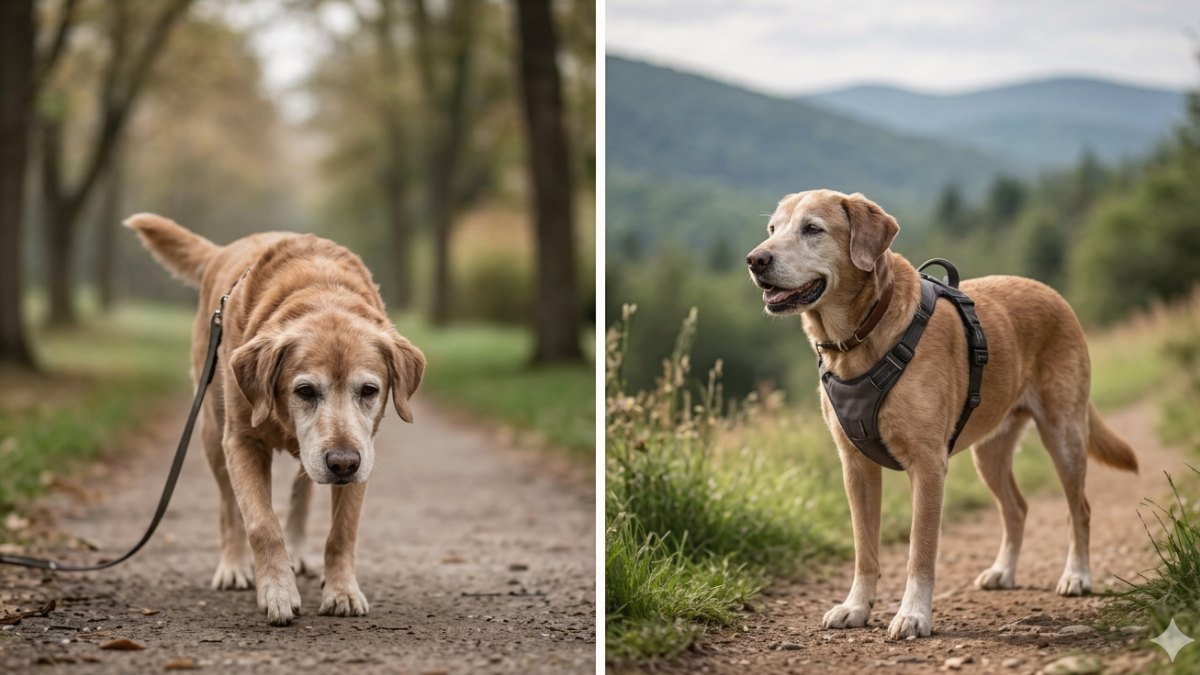
When a dog starts to slow down, the natural instinct is to walk them less. The instinct is half right. Senior dogs do need gentler exercise — but cutting it back too far stiffens the very joints you are trying to protect.
Why “less” is right but “none” is wrong
Movement is what keeps a joint healthy. It circulates the fluid that lubricates the cartilage and maintains the muscle that supports the joint. A dog who stops walking loses that muscle quickly, and weaker muscles mean more load on already-worn joints. Rest is not the cure for stiffness — the right amount of movement is.
Two gentle fifteen-minute walks will almost always serve an older dog better than one long march.
Short and frequent beats long and occasional
Ageing joints dislike two things: sitting still for too long, and sudden big efforts. Several short outings keep them mobile without overloading them. The classic mistake is the “weekend warrior” pattern — quiet all week, then a two-hour hike on Sunday. That is a recipe for a sore, stiff Monday.
Signs you have gone too far
Let your dog’s body, not the clock, set the limit. Ease off if you see:
- Stiffness or limping the next morning
- Lagging behind or wanting to turn back early
- Lying down mid-walk, or reluctance to start
- Heavier panting than the weather or pace explains
Making walks easier on the joints
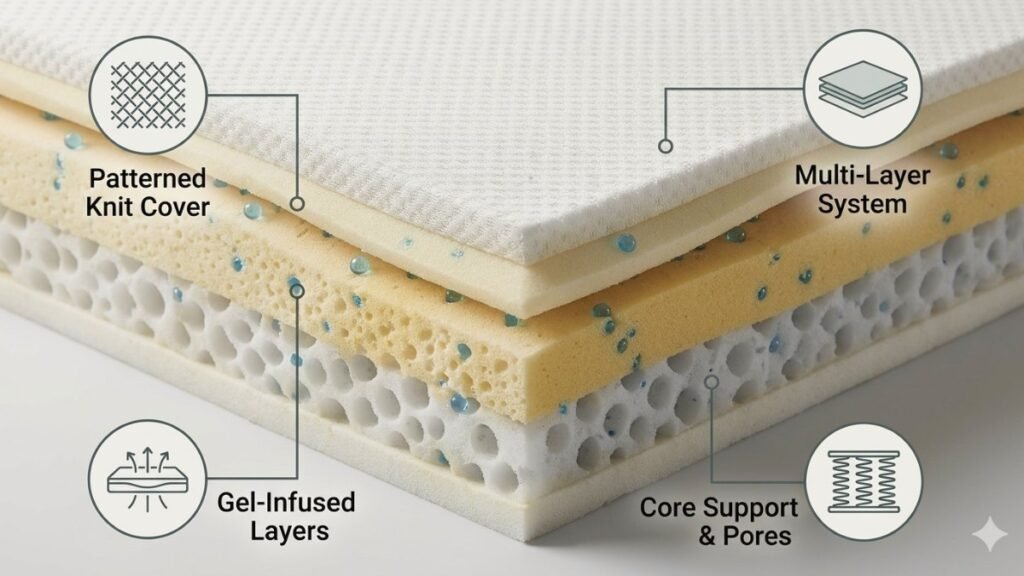
Favour grass and soft trails over hard concrete where you can. Start gently to let joints warm up rather than charging off the doorstep. Keep walks cooler — early morning or evening in Singapore’s heat. And remember that recovery is part of the routine: a supportive bed to rest on afterwards is what lets those joints bounce back for the next outing.
This article is general information and not a substitute for veterinary advice. Ask your vet about the right exercise level for your dog’s condition.
Key takeaways
- Senior dogs still need exercise — stopping walks accelerates stiffness
- Short and frequent beats long and occasional for ageing joints
- Let your dog set the pace, and watch for next-day soreness
- Soft ground and warm-ups are easier on older joints
The Olloy bed, made for ageing joints.
Orthopedic 40D–50D core, a low step-in edge, and a washed cover that survives a humid Singapore year.
Shop the bed