“Orthopedic” is printed on a remarkable number of dog beds — including some that are little more than a bag of stuffing. The term is not regulated for pet products, so it tells you nothing on its own. Here is what genuinely supports an ageing dog’s joints, and how to tell the real thing from the label.
What “orthopedic” is supposed to mean
A genuinely orthopedic bed is built to do one job: distribute a dog’s body weight evenly so that no single joint bears concentrated pressure while they rest. For a dog with arthritis or hip dysplasia, that even support is the difference between waking up loose and waking up sore. A bed that lets the hips sink to the floor is not orthopedic, whatever the tag says.
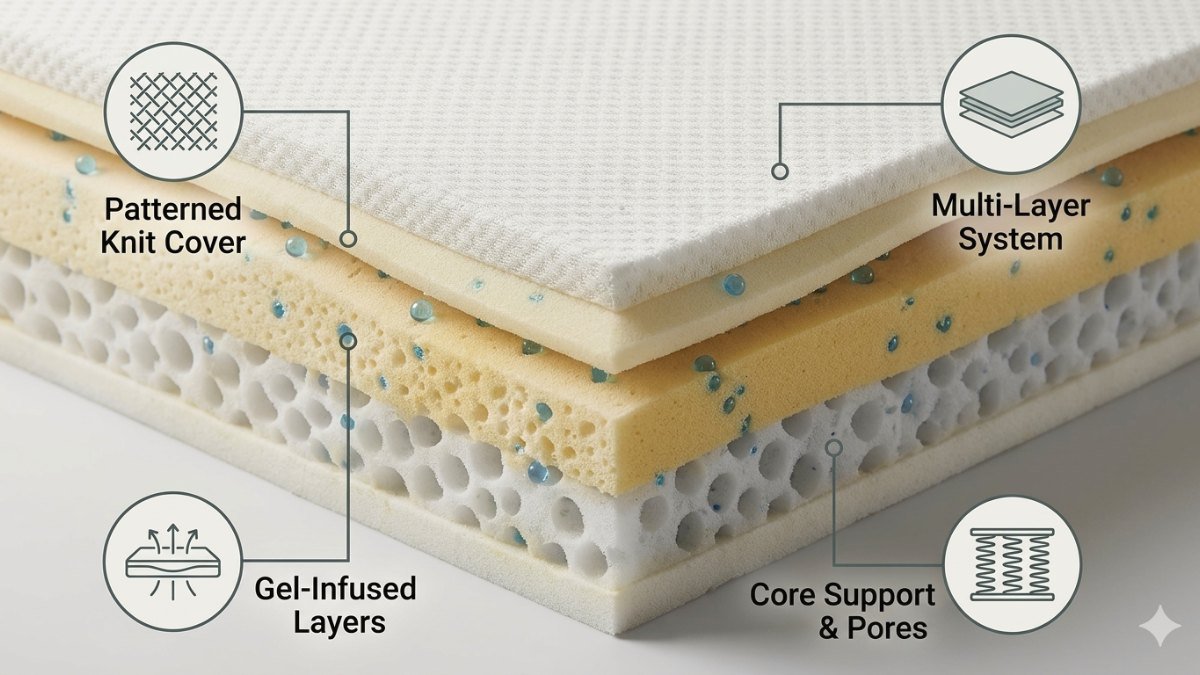
The foam science that matters
The heart of any bed is its fill, and not all foam is equal:
- High-density memory foam (around 50kg/m³) contours to the body and springs back slowly, holding support through the night. This is what you want.
- Low-density “egg-crate” foam feels soft in the shop but compresses flat within weeks, leaving the dog effectively on the floor.
- Polyester fibre fill — the stuffing in most budget beds — offers almost no lasting structural support.
Density is the number that matters. A soft bed and a supportive bed can feel identical for the first week — and completely different by the second month.
Three tests before you buy
1. Press it. Push your hand in firmly. Quality memory foam resists, then slowly recovers its shape. If your hand hits the base, the foam is too thin or too soft.
2. Check the thickness. A genuinely supportive foam core is typically at least 7–10cm thick, more for large breeds. Thin pads cannot support a heavy dog.
3. Look for a removable, washable cover. Senior dogs have accidents and shed; a bed you cannot clean properly will not last — and a breathable cover matters in Singapore’s humidity.
What we built into Paws & Rest
We start every bed with a single clinical-grade 50kg/m³ memory foam core — the same density used for human joint support — in a breathable, machine-washable cover suited to the local climate. The only difference between our sizes is the dimensions, never the quality of the foam. That is the part that earns the word.
This article is general information for dog owners. For advice specific to your dog’s joint condition, consult your veterinarian.
Key takeaways
- “Orthopedic” is unregulated — the word alone guarantees nothing
- Foam density (around 50kg/m³) is what actually supports the joints
- Cheap beds use low-density foam that flattens within weeks
- Test for thickness, recovery, and a removable washable cover before buying
The Olloy bed, made for ageing joints.
Orthopedic 40D–50D core, a low step-in edge, and a washed cover that survives a humid Singapore year.
Shop the bed