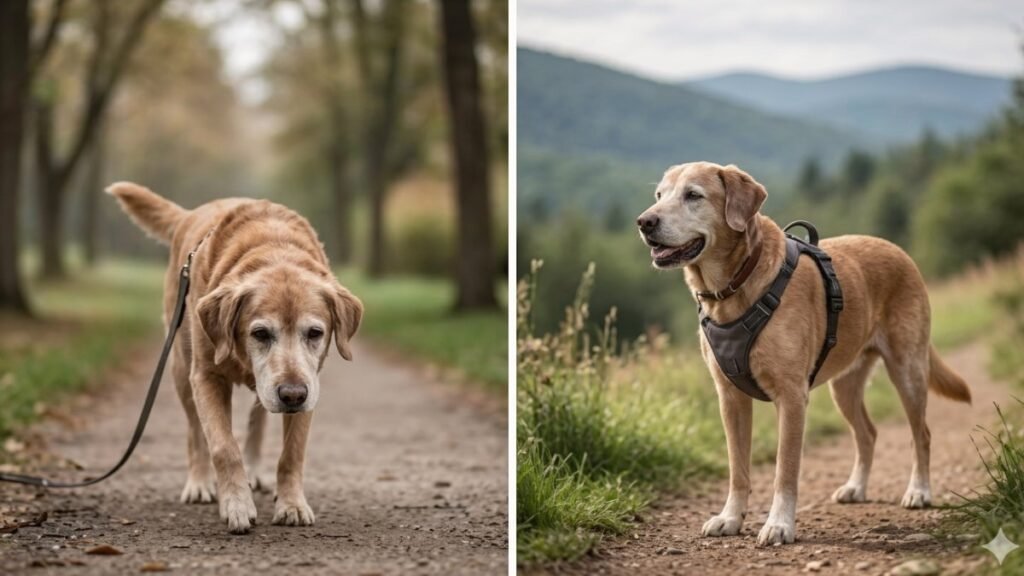
You know the moment. Your dog hears the leash, wants to come — and then takes those first few careful, stilted steps before loosening up. It is easy to file under “getting old.” Often, it is something more specific, and more treatable, than that.
Roughly four in five dogs over the age of eight show some degree of osteoarthritis. The early sign is rarely a limp. It is stiffness — worst first thing in the morning, after a long nap, or on cooler days — that eases once they get moving. That pattern is the clue.
What is actually happening in the joint
Healthy joints glide on a layer of smooth cartilage, cushioned by fluid. With age and wear, that cartilage thins and the fluid loses its lubricating quality. The body responds with low-grade inflammation, and the joint stiffens while at rest. After a night lying still — especially on a hard floor — that stiffness peaks. Movement warms the joint and redistributes the fluid, which is why your dog “walks it off.”
If your dog is stiff getting up but fine ten minutes later, that is not nothing. That is early arthritis announcing itself.
Stiffness or pain? How to tell
Dogs are stoic. They rarely cry out, so owners miss the signals. Watch for the quieter ones:
- Hesitating before stairs, sofas, or the car — places they used to jump without thinking
- Taking a moment to settle, or circling more before lying down
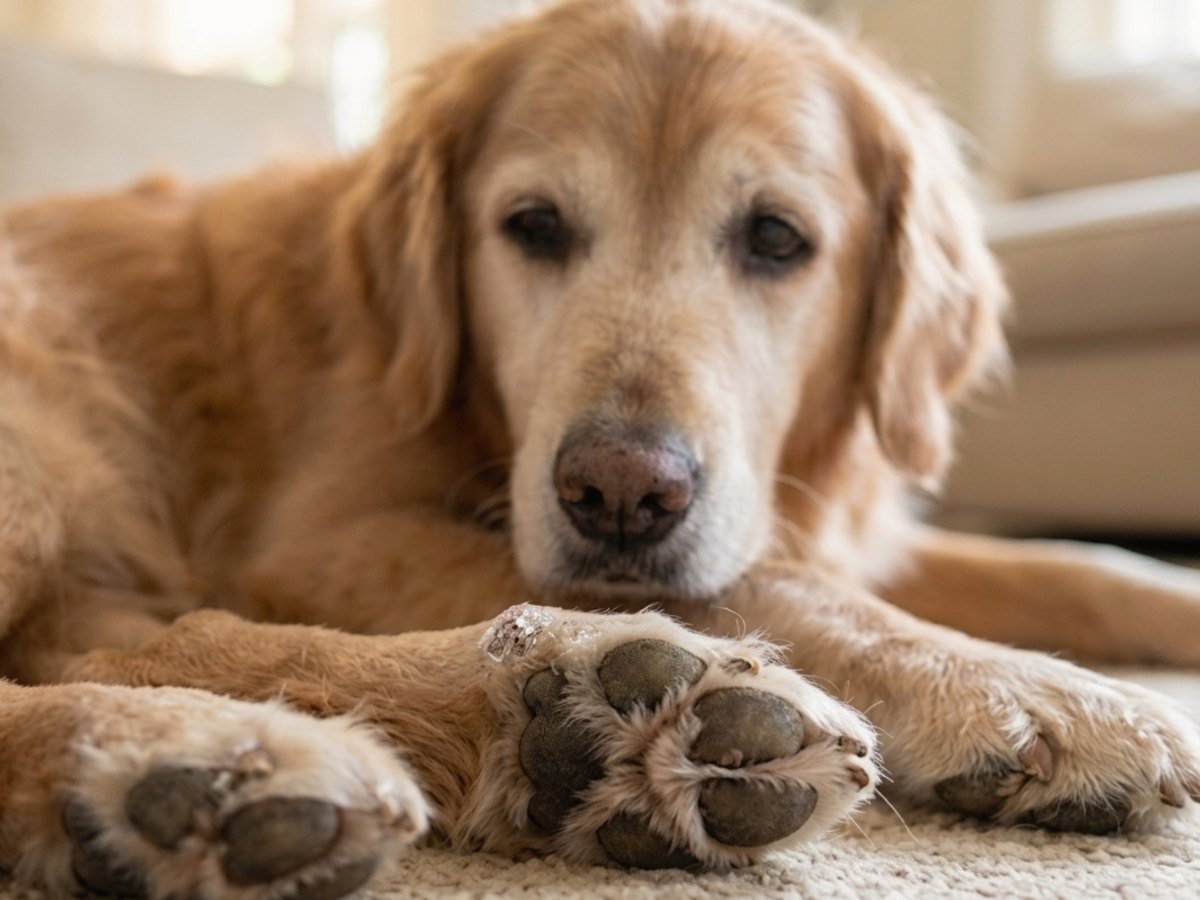
- Licking repeatedly at one hip, elbow, or knee
- A slight shift of weight off a back leg when standing
- Less enthusiasm for the second half of a walk
The four changes that help most
You do not need to overhaul your dog’s life. A few targeted changes do most of the work:
1. Keep them lean. Excess weight is the single biggest modifiable factor in joint pain. Even a small reduction takes a measurable load off every step.
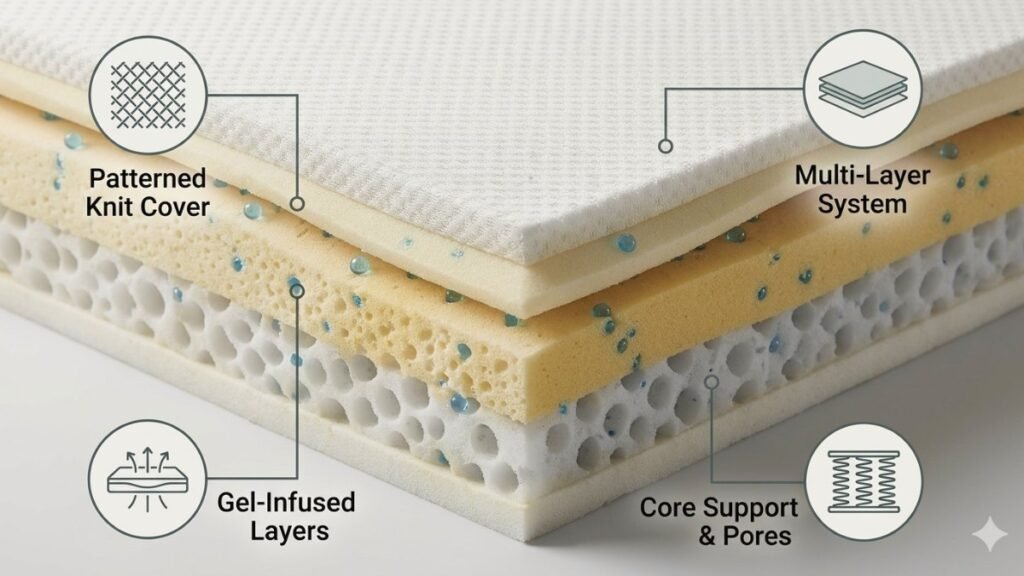
2. Give them a properly supportive bed. Hours on a hard floor compress the joints all night. A high-density memory foam bed spreads weight evenly so they wake up looser — the change owners most often notice first.
3. Move little and often. Short, regular walks keep joints mobile without overloading them. Long weekend hikes after a sedentary week do more harm than good.
4. Talk to your vet about joint support. Omega-3s and some joint supplements have genuine evidence behind them, and your vet can advise on pain relief if needed.
When morning stiffness needs a vet, not patience
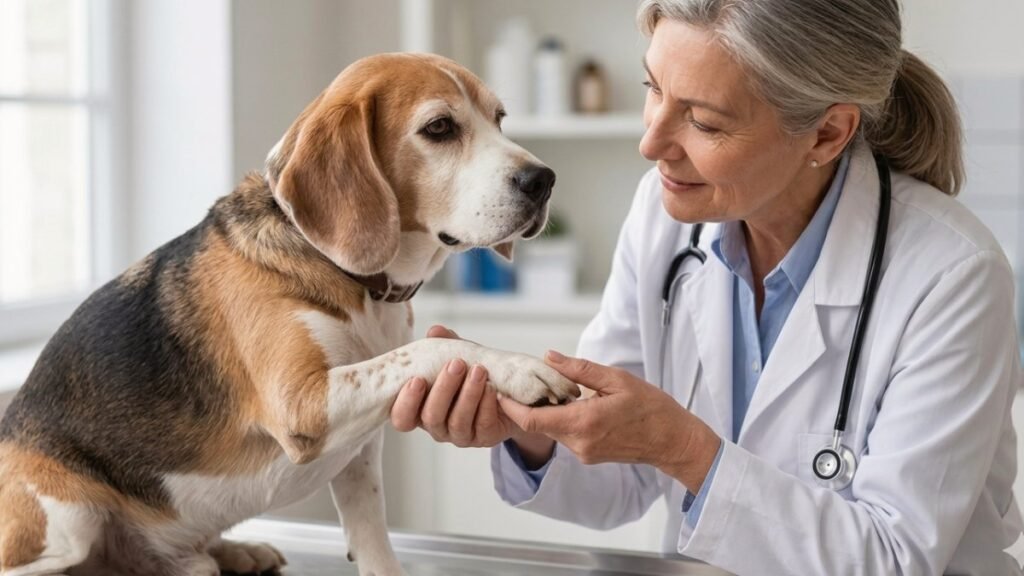
See your vet promptly if stiffness comes on suddenly, if your dog yelps or refuses to bear weight, or if it does not ease with movement at all. Those can signal something other than wear-and-tear arthritis, and earlier is always better.
This article is general information for dog owners and is not a substitute for veterinary advice. Always consult your vet about your individual dog’s health.
Key takeaways
- Morning stiffness in older dogs is usually early osteoarthritis, not simple ageing
- It is manageable — weight, warmth, gentle movement and joint support all help
- A supportive bed reduces the overnight pressure that makes mornings worse
- Sudden or severe stiffness warrants a vet visit, not a wait-and-see
The Olloy bed, made for ageing joints.
Orthopedic 40D–50D core, a low step-in edge, and a washed cover that survives a humid Singapore year.
Shop the bed